
52nd International Conference on
Improving University Teaching
Conference theme: “Connecting Across Cultures”
July 15-17, 2026
Opening Keynote:
Embedding Emotion in Researcher Education: Time for a Culture Shift
Emotion is an essential part of researcher practice. There is an emotional quality to being a researcher, and acknowledging this, and understanding how this impacts our ‘standpoint’ can usefully inform our work. Indeed, this is necessary work if we are researching in areas that align with our lived experience. I will take a closer look at the impact of doing work in an emotional context. Whether we recognise this as leading to vicarious trauma, or recognise ‘lower-level symptoms’ such as imposter syndrome, burnout, guilt and unproductive procrastination: this keynote will normalise emotional engagement with our research practice.
As well as focusing on resilience and individual power. time will be taken to consider structural barriers to being and doing. In considering a culture in which we can all flourish, the role of resistance and structural reform will be explored. We will consider the role of allies, of tenured and senior colleagues, and of peers in providing safe and nurturing conditions in which we produce our research and scholarship.
Opening Keynote Speakers:

Jo Ferrie is a methodologist and works with all forms of data. Based in the Sociology subject area within the School of Social & Political Sciences at the University of Glasgow, she is the Associate Dean of Skill and Method in the College of Social Sciences. Jo was the Deputy Director for Training for the Scottish Graduate School of Social Sciences (Scotland’s ESRC funded doctoral training partnership) and founding Director of Glasgow Q-Step: a pan-UK programme designed to upskill social science undergraduates in how they use and work with numeric data). Jo sits on the ESRC’s Expert Advisory Group for Data Infrastructure, Skill & Method, the Oversight Board of SMART Data UK and is a member of the Task & Finish Group examining Qualitative and Creative Methods Futures. Jo is also here representing Emotionally Demanding Research Network, an initiative set up by Susie Smillie and Julie Ridell to create space and resource to better support researchers working on difficult topics, at difficult times.
Jo’s interest in teaching Emotion was triggered by a project researching with families impacted by a life-limiting condition. The lack of support was astonishing, and the emotional impact was paralysing. In reflecting on what could have worked, and in conversation with many colleagues and students, Jo has produced a series of outputs all designed to normalise emotion in research.

Julie Riddell has worked within research for 19 years, working across a wide range of projects using mixed methodologies. Joining SPHSU in March 2013 as a Research Assistant for the Sexual Health programme, Julie worked within the Social Relationships and Health Improvement programme until the units closure in June 2025. She has most recently been involved in the creating the UK’s first research agenda for PMDD and has a particular interest in the impact of hormones and menstruation on health.
Julie is keen to encourage an open and honest approach to emotions in research, emphasising the importance of recognising our humanness and the positive and negative role emotions can play in connecting to our work. Julie has been involved in developing guidelines to support researchers conducting emotionally demanding research and is one of the co-founders of the Scottish Emotionally Demanding Research Network. Julie joined the University of St Andrews in July 2025 as a Research Fellow working on the ‘Mainstreaming sustainable and effective support to people undertaking emotionally demanding research’ grant and keen to ensure that conversations around EDR recognise the potential impact on all involved in the research regardless of role, grade or experience. She therefore emphasises the need for support to become an institutional responsibility rather than reliance on a ‘resilient’ few to do the work.
Closing Keynote:
Digital tools become obsolete. Creative thinking doesn’t.
In an era defined by rapid technological change, educators face a deceptively simple but profoundly urgent question: what are we actually teaching when we teach with digital tools? This keynote argues that the thinking behind the tools matters more than the tools themselves, and that the most enduring gift an educator can give a student is not fluency in any particular platform, but the creative confidence and critical capacity to work purposefully across whatever tools the future demands. Drawing on our recent book The Student Guide to the Creative Studio in the Digital Age, and work on the National Curriculum Review, we argue for a fundamental reorientation of how digital creativity is understood and taught. Rather than positioning the classroom as a space for tool acquisition, we propose a vision of it as a creative studio. A dynamic, expansive environment that may be physical, digital, or hybrid, and that foregrounds creative process over technological output.
Our talk will explore three interlocking ideas:
- Creativity is not a product of tools, but a disposition cultivated through practice. In a world where software is superseded and AI can generate outputs at scale, the competitive edge for learners lies in their capacity for original thinking, experimentation, and purposeful making.
- Play is a pedagogy, not a distraction. Playful approaches to digital creativity, including game-based learning, making, and exploratory problem-solving, are not merely engaging; they are epistemologically powerful, building the kind of resilient, adaptive thinking that no app can replicate.
- The studio must expand. The concept of the creative studio can no longer be confined to a university building or a prescribed set of licensed software. It must encompass home offices, online platforms, collaborative digital spaces, and the student’s own imagination, positioning every learner as a practitioner capable of building and sustaining a creative life.
Grounded in both practice and theory, and informed by contributions from industry experts and education specialists, this keynote challenges educators at every level to reconsider their assumptions about digital creativity, not as a technical skill to be delivered, but as a human capacity to be cultivated. It offers practical implications for curriculum design, assessment, and the role of play in higher education, and invites the audience to ask not which tools they are teaching, but what kind of thinkers they are helping to build.
Closing Keynote Speakers:
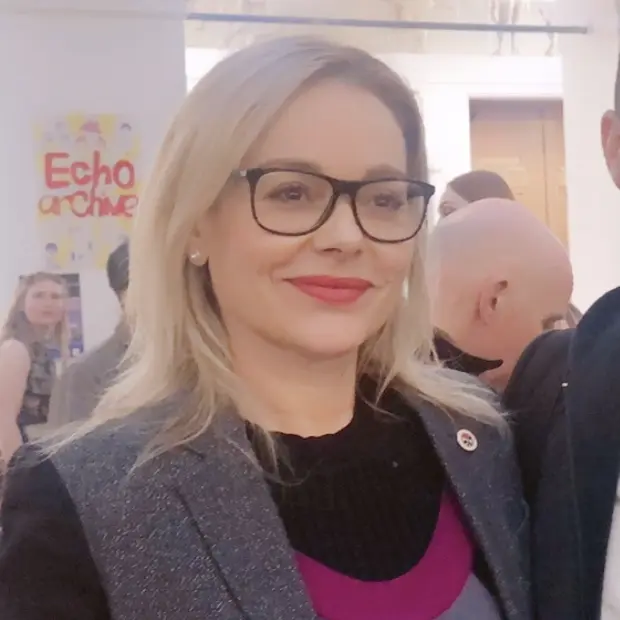
Dr. Denitsa Petrova is a Lecturer in Digital Design, Edinburgh College of Art, University of Edinburgh.
She is a creative practitioner, lecturer and educationalist. She completed a PhD in Digital Media and Art in Public Space at the University of Edinburgh, focusing on the potential of the Social Web as a catalyst for shared creativity in public spaces. With several years of experience in the creative industry, Denitsa now teaches courses in User Experience Design, User Interface Design, and Digital Art. She is currently directing the MSc programme in Digital Media Design. Denitsa has led and participated in several research projects exploring tools for digital teaching and collaborative learning. Her current research focuses on online pedagogy, leveraging digital tools for education, and harnessing the power of generative artificial intelligence in academic and creative contexts.
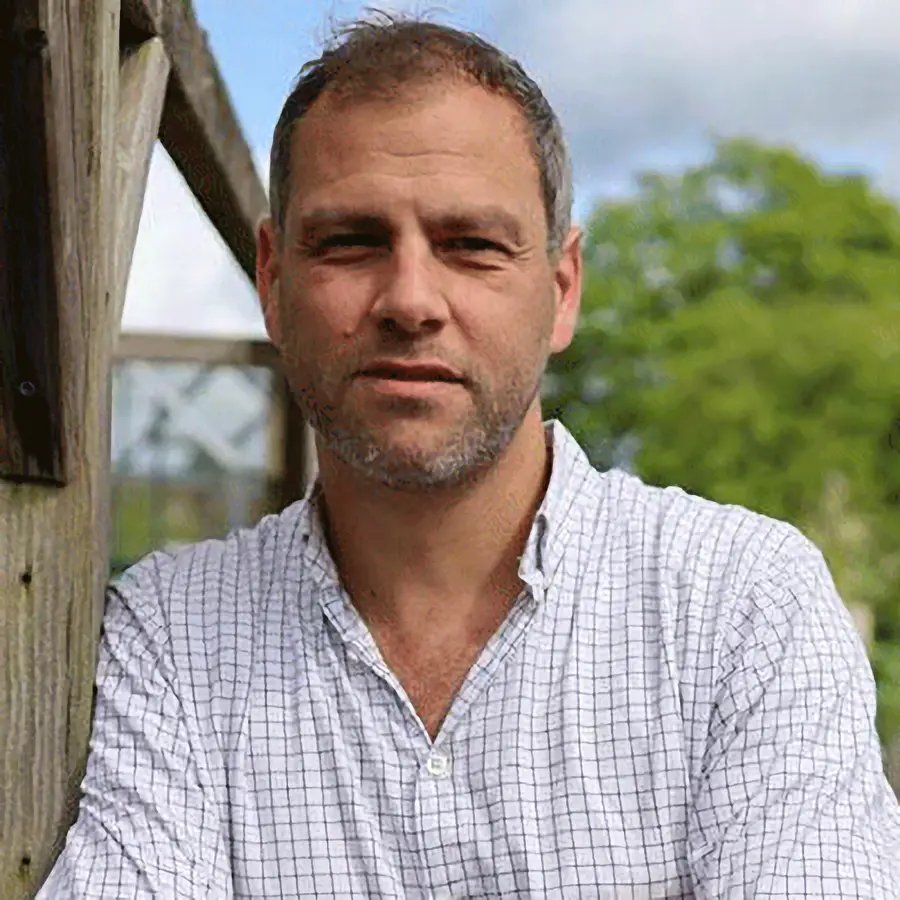
Dr. Doug Specht is a Chartered Teacher, a Principle Fellow of AdvanceHE and Head of the School of Media and Communication at the University of Westminster.
His research explores themes related to environmental justice, human rights, and access to education, with a focus on the production and codification of knowledge though cartographic artefacts and in educational settings. In recognition of his work, he has been appointed as a Chartered Geographer and has been awarded Advanced Teacher Status. Dr. Specht has authored numerous articles and books, including Mapping Crisis, the Routledge Handbook of Geospatial Technology and Society, the Media and Communications Student Study Guide and Imagining Apocalyptic Politics in the Anthropocene. He is a columnist at Geographical magazine, and also writes regularly on ethics, environmental and human rights, education, and mapping practices in such publications as WonkHE, The Conversation, and for Times Higher Education.
